


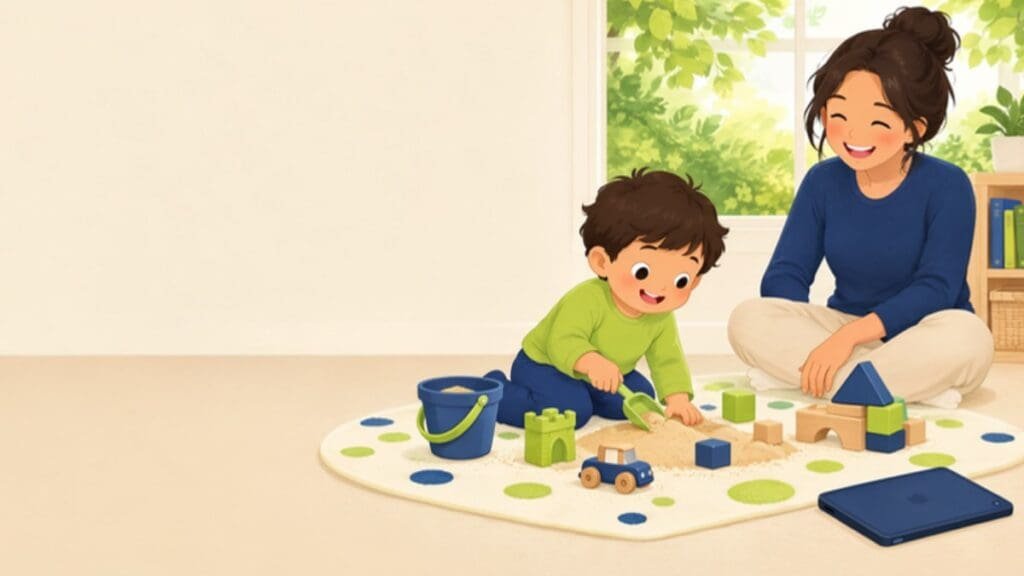
A blog to help parents understand why some children react strongly to sounds, textures and food.
By Dinesh Kumar, Pediatric Occupational Therapist & Founder – Future Wings Clinic
Parents today hear about sensory issues in children everywhere, though the word “sensory” was not common when most of us were children. The questions behind it are very ordinary. Why does my child cover her ears at a balloon burst? Why does he refuse certain foods? Why is she calm with a screen but restless outside?
What “Sensory Processing” Means
All of us react to our senses. We look away from a bright light. We feel uncomfortable with a very loud noise or a very rough texture. Our bodies learn to cope with these.
Some children react much more strongly to one particular sense. This is what we mean by sensory sensitivity.
What Sensory Issues in Children Can Look Like
In the clinic, parents describe things like:
- Sounds: a child who is frightened by the pressure cooker’s whistle, covers his ears at a balloon bursting, or finds loud music such as a DJ or a dhol very hard.
- Food: a child who will not eat a certain food. Often the problem is not the taste. It is the texture of the food in the mouth.
- Clothes: a child who only wears very soft clothes, and avoids a shirt because of the collar.
- Movement: a child who is always seeking movement.
One of these now and then is normal. Many children are fussy about food, or dislike a loud sound. What we look at is whether it goes on through the day, and whether it limits what the child can do.
Why It Seems More Common Now
Many of us grew up playing in the park, in sand and mud, meeting a wide range of sensations every day. Today many families are nuclear families, children spend much more time on screens, and outdoor play has become minimal. Since COVID, we have seen more children whose screen time has gone up a lot.
Outdoor play gives children touch, movement, sound and social experience, all in one.
Screen Time: Honest Advice
I do not tell parents to take screens away completely. That is next to impossible, and we adults are on screens too. Children learn by watching us.
What I do ask is that parents think about how the screen is used.
- A screen is calming. Adults also scroll reels when we feel overwhelmed. That is why a child is calm in front of one.
- The trouble starts when a child scrolls for long periods and there is no structured play in the day.
- When we were children, a favourite programme came at a fixed time, and we waited. Today, whatever we want is available at once and ads can be skipped. That takes away the waiting and the structure in a child’s day.
Use screens in a measured way, and do not let them take the place of play. If your child is calm only with a screen and restless without one, talk to a professional. You can also read how screen time can affect speech in our guide to the signs of speech delay in children.
Play Is Part of Development
Crawling, climbing, running, jumping and free play all support development. Parents naturally want children to do well in studies, but academics alone are not enough. Children need to play outside, make friends, and learn how to react in social situations. A child learns language, habits and emotions through peers. A child on a screen all day misses outdoor play, and with it the sensory experience of sand and soil.
What Parents Can Do at Home
- Follow a routine. Keep the same simple routine through the week: wake up, school, return home, and so on.
- Do not make your home a therapy room. Keep it a home. A therapy room at home overloads a child.
- Encourage parallel play. Children playing alongside each other helps. If you avoid parties, arrange small get-togethers at home.
- Repeat the home plan. Therapy does not always mean something is wrong. It can simply be support. What matters is repeating at home what the therapist plans.
When to Seek Help
There is no single age. By around two to two and a half, you can see whether your child plays well for their age, reacts to things comfortably, and plays alongside other children. If you notice problems, start looking for help as early as you can.
If something feels wrong, trust that feeling. If everything turns out to be fine, that is the best result.
Learn more about our sensory integration therapy for children and occupational therapy. There is no charge for visiting Future Wings Clinic in Sector 17, Dwarka. An assessment may be chargeable, and we tell families about fees in advance. Schedule a visit.
Dinesh Kumar is a paediatric occupational therapist with more than 10 years of experience and the founder of Future Wings Clinic in Dwarka, New Delhi.
Related reading: Child Struggling at School? How Occupational Therapy Helps and How Do I Know If My Child Needs Occupational Therapy?


[…] Related reading: how screen time and play affect a child’s senses is explained in sensory issues in children: sounds, food, clothes, screens. […]