

Sensory Integration
Future Wings Clinic offers sensory integration therapy in Dwarka, New Delhi, for children aged 1 to 15. Our therapists use play-based, one-to-one sessions to help children who are over- or under-sensitive to sound, touch, movement and texture. Sessions are in English and Hindi, and online sessions with parent support are also available. Our clinic is at 131, Second Floor, Pocket A2, Indraprastha Enclave, Sector 17, Dwarka.
Sensory Integration is an approach intended to improve children’s ability to respond to sensory information more effectively. Children with sensory processing impairments, who might struggle to filter and interpret sensory stimuli from their surroundings, benefit most from it.
Through structured activities, sensory integration therapy helps children regulate their sensory responses, improving their ability to engage with the world around them. This approach enhances motor skills, focus, and emotional regulation by helping children manage sensory sensitivities or over-sensitivities in a safe, controlled manner.
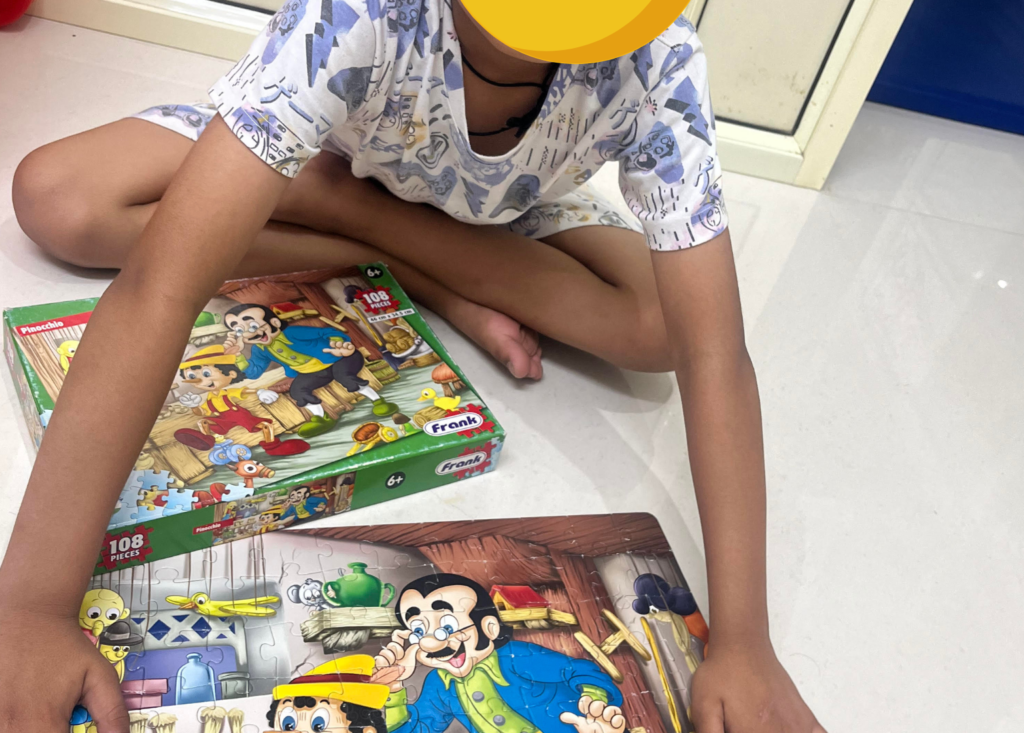
At Future Wings Clinic, we understand that every child experiences touch, sound, movement and texture differently, and that sensory needs vary widely from child to child.
If your child covers their ears at everyday sounds, avoids certain textures or foods, constantly seeks movement, or struggles to settle and focus, early support can make a lasting difference.
Led by Dinesh, our team creates personalised therapy plans rooted in structure, empathy, and patience. Whether your child is just beginning their journey or continuing to build on their progress, we are here to walk alongside you, every step of the way. If you’re looking for sensory integration therapy in Dwarka, get in touch with us. We’re here to listen, support, and help your child thrive with confidence and joy.
Signs Your Child May Have Sensory Difficulties
Every child is different, and one sign on its own does not mean there is a problem. Parents often tell us about patterns like these:
- Covers their ears or becomes upset at everyday sounds such as the mixer, hand dryer or traffic.
- Avoids certain food textures, clothing tags, hair washing or nail cutting.
- Constantly seeks movement, such as spinning, jumping or crashing into furniture, and finds it hard to sit still.
- Seems unaware of pain, or does not react when called or touched.
- Avoids messy play, or gets very distressed by sand, paint or glue.
- Is clumsy, avoids playground equipment, or struggles to settle and focus.
These can happen with autism, ADHD, developmental delay or on their own. A sensory integration assessment looks at what is behind your child’s behaviour, so the plan fits the child. Related pages: pediatric occupational therapy, autism therapy and behaviour therapy.
What to Expect at Your First Visit
You do not need to commit to therapy to get started. The first step is a conversation and an assessment.
- Call us and speak to our advisor first. Your child does not always need to come to the first visit.
- Bring any previous reports or school notes you have.
- We observe how your child responds to touch, sound and movement, and plan play-based activities around their needs.
- There is no charge for visiting the clinic. An assessment may be chargeable, and therapy sessions are chargeable. We tell you about fees in advance.
- Sessions and consultations are in English and Hindi.
Clinic hours: Monday to Friday 11am to 7pm, Saturday and Sunday 10am to 2pm. Call +91 95555 19482 or +91 98711 77983, or schedule a visit.
Frequently Asked Questions (FAQs) - Sensory Integration and Behaviour Therapy
This could be auditory hypersensitivity, which means the brain processes sound differently. It’s common in children with sensory processing issues. Our sensory integration therapy helps children gradually get comfortable with such sounds using gentle exposure and play.
It might not be. Many kids dislike certain textures due to tactile hypersensitivity. Through sensory play, we help them explore different textures in a safe, fun way so these everyday tasks become easier over time.
It could be, but restlessness can also come from sensory needs. During assessment, our therapists look for patterns — whether your child is seeking movement, touch, or stimulation. Therapy then focuses on improving focus and calming the sensory system through structured play.
It’s a fun, play-based approach that helps children process information from their senses (touch, sound, movement, sight) correctly.
At Future Wings Clinic, we use swings, obstacle courses, textures, and activities that strengthen body awareness, balance, and emotional control.
No. It is often part of a plan for children with autism, ADHD or developmental delay, but sensory difficulties can also appear on their own. An assessment shows whether sensory needs are behind what you are seeing.
Call +91 95555 19482 or +91 98711 77983, or schedule a visit. Our advisor will explain the process first, and your child does not always need to come to the first visit.
We see children from 1 to 15 years old. Sessions and consultations are in English and Hindi.
There is no charge for visiting the clinic. An assessment may be chargeable, and therapy sessions are chargeable. We tell you about fees in advance.