
What is Behaviour Therapy?
Behaviour therapy is a form of psychotherapy that helps individuals replace unhealthy behaviors with positive ones. It is based on the idea that all behaviours are learned, and therefore, they can also be unlearned or modified.
The approach is rooted in psychological principles such as conditioning, reinforcement, and learning theory. Instead of focusing heavily on emotions or unconscious thoughts, behaviour therapy works on observable actions and measurable changes.
Why Behaviour Therapy is Important
Behaviour therapy plays a crucial role in treating a wide range of mental health conditions. It is especially useful because it provides practical strategies that individuals can apply in real-life situations.
Key Benefits:
-
- Helps manage anxiety and stress
-
- Improves emotional control
-
- Builds healthier habits
-
- Enhances coping mechanisms
-
- Provides structured and goal-oriented treatment
Its evidence-based nature makes it a trusted option for therapists and patients worldwide.
Types of Behaviour Therapy
There are several forms of behaviour therapy, each designed to address specific issues. Understanding these types helps in choosing the right approach.
1. Cognitive Behavioural Therapy (CBT)
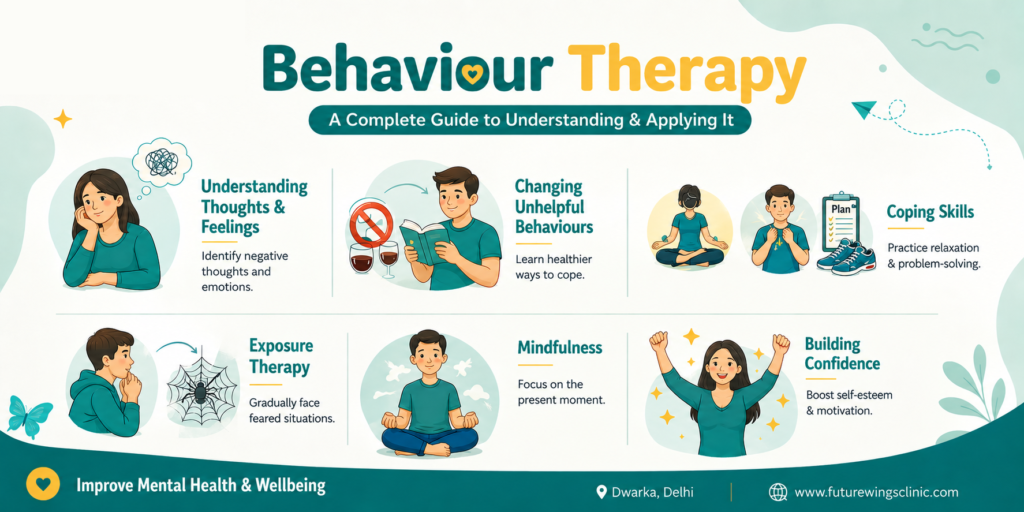
This is the most popular form, combining behavioural techniques with cognitive restructuring. It helps individuals identify negative thought patterns and replace them with healthier ones.

2. Exposure Therapy
Commonly used for phobias and anxiety disorders, this method gradually exposes individuals to their fears in a controlled environment to reduce sensitivity over time.
3. Operant Conditioning
This technique uses rewards and consequences to influence behaviour. Positive actions are reinforced, while negative behaviours are discouraged.
4. Systematic Desensitisation
A step-by-step method that combines relaxation techniques with gradual exposure to anxiety-triggering situations.
5. Aversion Therapy
This approach links unwanted behaviours with unpleasant experiences to reduce or eliminate them.
How Behaviour Therapy Works
Behaviour therapy follows a structured process designed to bring measurable improvements.

Step 1: Assessment
The therapist evaluates the individual’s behaviour patterns, triggers, and challenges.
Step 2: Goal Setting
Clear and realistic goals are established to guide the therapy process.
Step 3: Intervention
Specific techniques are applied, such as reinforcement, exposure, or skill training.
Step 4: Monitoring Progress
Regular tracking ensures that improvements are consistent and adjustments can be made if needed.
Techniques Used in Behaviour Therapy
Behaviour therapy uses practical tools that can be applied both during sessions and in everyday life.
Positive Reinforcement
Rewarding desired behaviours to encourage repetition.
Negative Reinforcement
Removing an unpleasant factor when a positive behaviour occurs.
Modeling
Learning by observing others and imitating positive behaviours.
Role-Playing
Practicing real-life situations in a safe and controlled setting.
Behavioral Activation
Encouraging engagement in meaningful activities to improve mood and motivation.
Conditions Treated with Behaviour Therapy
Behaviour therapy is highly versatile and can be used to treat various psychological and behavioural issues.
Common Conditions:
-
- Anxiety disorders
-
- Depression
-
- Phobias
-
- Obsessive-Compulsive Disorder (OCD)
-
- Post-Traumatic Stress Disorder (PTSD)
-
- Attention Deficit Hyperactivity Disorder (ADHD)
-
- Substance abuse and addiction
Its adaptability makes it suitable for children, adults, and even families.
Advantages of Behaviour Therapy
Behaviour therapy offers several unique advantages compared to other therapeutic approaches.
-
- Evidence-Based: Supported by scientific research
-
- Short-Term Results: Often produces faster improvements
-
- Practical Approach: Focuses on real-world application
-
- Structured Process: Clear goals and measurable outcomes
-
- Versatile: Suitable for a wide range of issues
Ways to apply Behaviour Therapy in Daily Life
One of the biggest strengths of behaviour therapy is its practical application in everyday situations.
Simple Ways to Apply It:
-
- Set small, achievable goals
-
- Reward yourself for positive actions
-
- Replace negative habits with healthier alternatives
-
- Practice relaxation techniques regularly
-
- Track your progress to stay motivated
These small changes can lead to significant long-term improvements.
Final Thoughts
Behaviour therapy is a powerful, practical, and scientifically supported approach to improving mental health and behavior. By focusing on present actions and using structured techniques, it empowers individuals to take control of their lives and build healthier habits.
Whether dealing with anxiety, stress, or unwanted behaviors, behaviour therapy offers a clear path toward positive change. Its real-world applicability and measurable outcomes make it one of the most effective therapies available today.