
If you’ve never seen an occupational therapy session, you may wonder what actually happens inside the therapy room. Occupational therapy activities for children can look a lot like play—but there is an important difference. As Dr. Dinesh explains, “OT mein activities play jaisi zaroor hoti hain, lekin har activity ka ek specific purpose hota hai.”
The First OT Session Is About Understanding the Child
When a child comes to Future Wings Clinic for the first time, therapy does not begin immediately. The first priority is to understand the child.
The occupational therapist first speaks to the parents about their concerns and then observes the child in different situations.
The therapist may look at:
- Whether the child follows simple instructions
- Eye contact and response to their name
- Reaction to different sounds, including loud noises
- Interaction with activities
- Focus and attention
- Fine and gross motor skills
These observations help the therapist understand where the child needs support. Based on the assessment, individual therapy goals are then planned.
This is important because occupational therapy is not a standard set of exercises that every child receives. The activities are selected according to the child’s needs.
What Happens During an Occupational Therapy Session?
An OT session can look very different from one child to another.
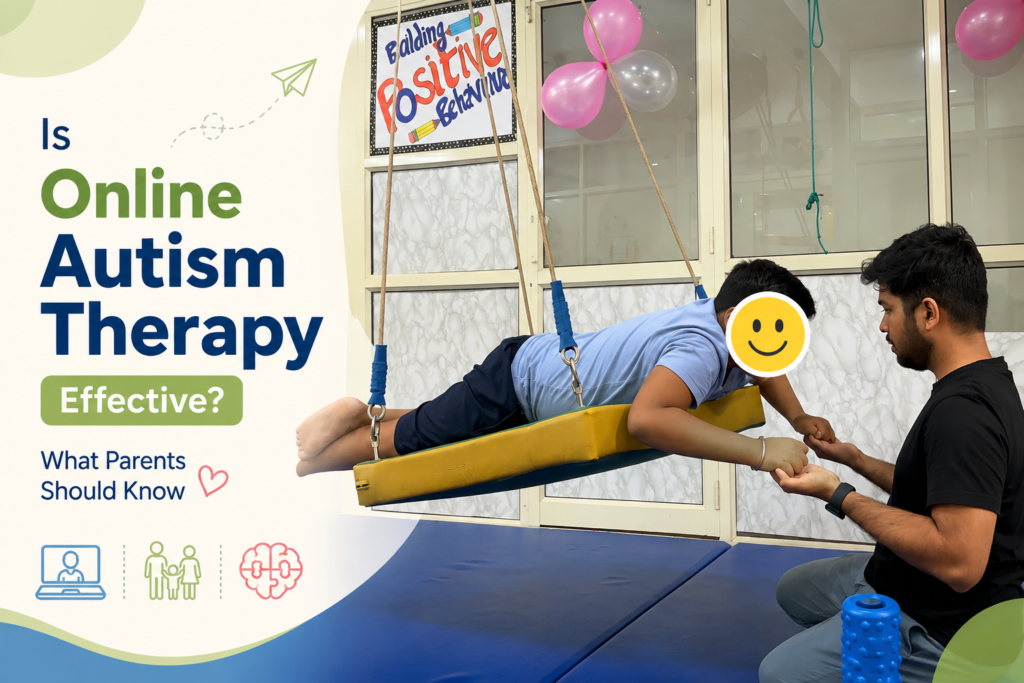
A child who needs help with sensory processing may work with swings, trampolines or obstacle courses, while another child may spend more time developing fine motor skills at a table.
For sensory and gross motor development, therapists may use:
- Trampoline
- Swings
- Ladders
- Obstacle courses
- Vestibular boards
- Pushing and pulling activities
These activities can help develop body awareness, motor planning, balance and coordination.
For fine motor development, therapists may use:
- Cloth clips
- Therapy putty
- Peg boards
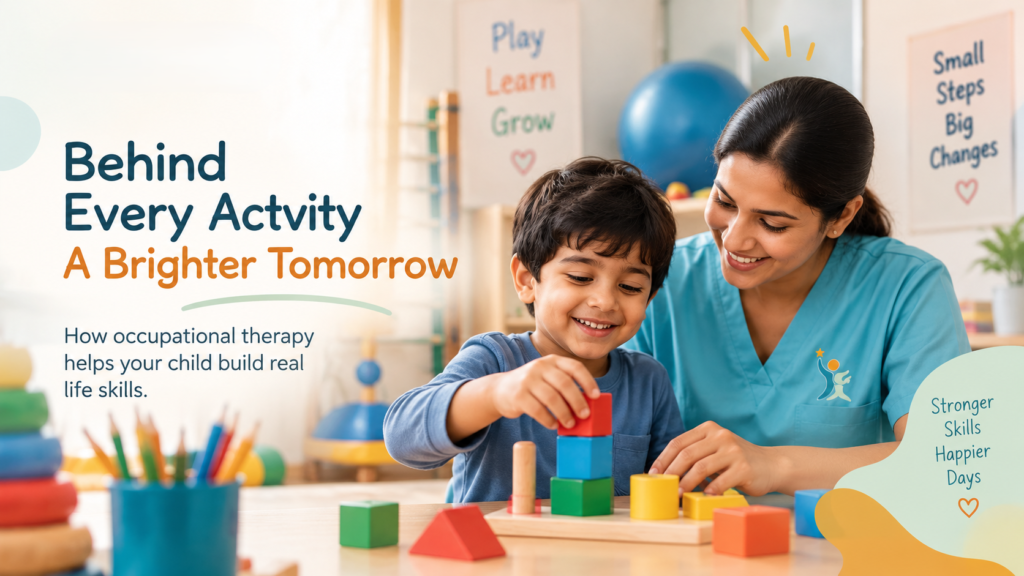
- Puzzle blocks
These activities work on finger strength, hand control, grasp and precision.
Why Does OT Look So Much Like Play?
This is probably one of the most common questions parents have.
Dr. Dinesh puts it simply:
“OT ka main goal bacche ko everyday life mein independent aur functional banana hai.”
That may mean helping a child sit and participate in class, hold a pencil, write, dress independently, eat, play appropriately, follow routines or manage sensory challenges.
So, while the activity may look like a game, the therapist is working towards a specific functional goal.
A Swing Is More Than Just a Swing
- A swing can be used to work on movement and balance, coordination, postural control and sensory regulation.
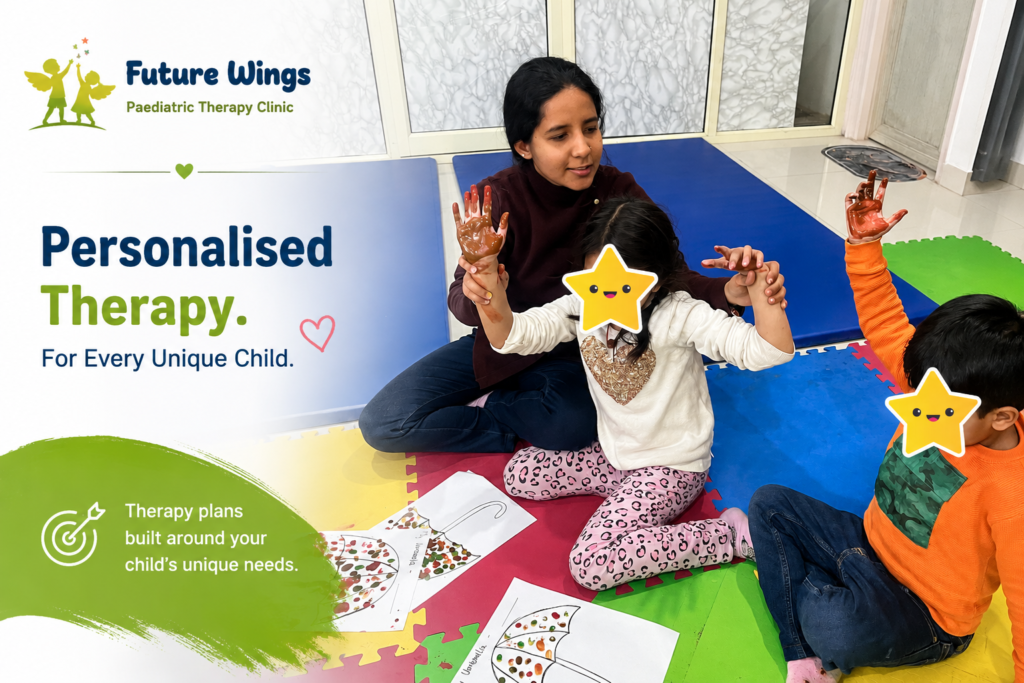
Colouring Is More Than Just Colouring
- Colouring can help develop pencil control, attention and focus, as well as visual-motor coordination.
Puzzles and Peg Boards Build Important Skills
- These activities can work on attention and focus, grasp, pinching and eye-hand coordination.
An Obstacle Course Has a Purpose Too
- Moving through an obstacle course can help a child develop motor planning, balance, coordination and body awareness. It also teaches the child how to understand and follow a sequence of actions.
That is the difference between normal play and therapeutic play.
A Real Example From the Therapy Room
Dr. Dinesh recalls a 5-year-old boy who came to the clinic because he found it difficult to sit in school, did not consistently respond to his name and was constantly running around.
During the OT assessment, the therapist identified difficulties with focus and attention, sitting tolerance, name response and hyperactivity.
The therapy plan included activities such as pushing and pulling, ladder climbing, swinging and tabletop activities designed to build sitting tolerance and attention.
Initially, the parents felt that their child was simply playing during therapy sessions.
But after a few sessions, they began noticing changes. He was able to sit in class for longer and started responding to his teachers when they called his name.
That was when the parents understood something important: the therapist wasn’t simply keeping their child occupied. Every activity had a specific purpose.
Occupational Therapy Is About Everyday Independence
Occupational therapy for children is ultimately about helping a child participate more independently in everyday life.
The goal isn’t simply to complete an exercise inside the therapy room. It is to help the child use those developing skills in real situations—at home, at school and while playing.
As Dr. Dinesh says, “OT ka main goal bacche ko everyday life mein independent aur functional banana hai.”
The activities may be fun. They may look like games. But behind each one is a carefully chosen therapeutic goal based on that particular child’s needs.
And sometimes, the most meaningful therapy doesn’t look like therapy at all.
About Dr. Dinesh Kumar
Dr. Dinesh Kumar is a Paediatric Occupational Therapist and Founder of Future Wings Clinic, Dwarka, New Delhi. He works with children and families dealing with autism, developmental delays, sensory processing difficulties, ADHD and other developmental challenges.
This is one of the many lessons Dr. Dinesh has learned from working with families over the years. For more information about therapy, leave a message and we’ll call you back.