
If you’ve ever seen your child melt down in a supermarket aisle, scream because you gave them the “wrong” colour cup, or cling to you tightly during loud gatherings, you already know that emotional regulation is not just a developmental skill; it’s a daily survival skill for families.
In Indian households, we often hear: “Itna sa baat hai, ro kyun rahe ho?” or “Chup raho, sab dekh rahe hain.”
But emotions don’t switch off because adults want them to. Children feel intensely. Their worlds are small, but their feelings are big.
And that’s precisely why understanding emotional regulation matters.
TL;DR: The Importance of Emotional Regulation in Child Development
“Kabhi Khushi Kabhie Gham” isn’t just the name of a Bollywood movie—it’s pretty much a child’s emotional journey too. 😊 The difference is, children aren’t born knowing how to handle those big feelings. They learn it, one moment at a time.
Emotional regulation is a child’s ability to understand, express, and manage emotions in healthy ways. It’s what helps them cope with disappointment, wait for their turn, calm themselves after frustration, and build positive relationships.
The article explains why emotional regulation is so important:
- It helps children develop healthy friendships and social skills.
- It improves focus, learning, and problem-solving in school.
- It builds resilience, allowing children to recover from setbacks.
- It supports better mental health by reducing anxiety, frustration, and behavioural challenges.
- It strengthens self-confidence and independence as children learn to navigate everyday situations.
The good news? Emotional regulation isn’t something children either have or don’t have—it’s a skill that can be nurtured. Through structured play, consistent routines, positive modelling, and evidence-based therapies, children gradually learn to recognise their feelings and respond to them in healthier ways.
Key takeaway:
Every meltdown is communication, not misbehaviour. When we teach children how to manage their emotions instead of simply asking them to “calm down,” we’re giving them a life skill that will support them in school, relationships, and adulthood. At Future Wings Clinic, emotional regulation is woven into therapy with empathy, patience, and personalised strategies—helping every child grow with confidence, one small step at a time.
What Is Emotional Regulation, really?
It’s the ability to understand, manage and healthily express emotions.
A 4-year-old who waits a few minutes for his turn at the slide, a 6-year-old who says “I’m angry” instead of pushing someone- this is emotional regulation in action.
Children learn this over time, not overnight. And they know it mainly from the adults around them – parents, grandparents, teachers, caregivers.
Why Emotional Regulation Is Essential in Childhood?
- It Shapes Behaviour
A child who cannot regulate emotions often expresses distress through:
- crying
- hitting
- throwing things
- running away
- shutting down
But when emotional skills grow, children begin to pause, think, communicate, and choose better responses.
- It Supports Learning
A child who is constantly overwhelmed cannot focus. A calm nervous system learns better.
This is why teachers always say, “Please settle the child emotionally first; learning will follow”
- It Builds Strong Relationships
Children who can identify and express emotions form healthier bonds with parents, siblings, and friends.
- It Improves Long-Term Mental Health
Good emotional regulation in childhood reduces the chances of anxiety, impulsiveness, aggression, and emotional instability later in life.
Teaching a child to shut down their emotions does not make them calm. It makes them numb. Calmness is a skill that develops after a child has learned to feel their emotions, not ignore them.
Eli Harwood Tweet
Day-to-Day Examples from Indian Homes
Here are some situations every Indian parent has probably faced:
✔ The School-Bus Morning Drama
Your child is crying because the uniform is “itchy” or breakfast is “not right.”
Most parents respond quickly with: “Late ho rahe hain! Jaldi karo!”
But the real problem was sensory overload or anxiety. Not disobedience.
✔ Tantrum at a Social Function
Loud music, too many people, unfamiliar laps, and children often feel overwhelmed.
A meltdown here isn’t “bad behaviour,” it’s emotional exhaustion.
✔ The Homework Battle
A child throwing the pencil isn’t necessarily being stubborn. They may be tired, hungry, or frustrated because the task is too complex.
Understanding why a child reacts helps us respond with empathy instead of anger.
Emotional Regulation for Children with Special Needs
For neurodivergent children, Autism, ADHD, sensory processing difficulties, developmental delays, and emotional regulation are more complex.
Common challenges include:
- Difficulty expressing feelings
- Low frustration tolerance
- Sensory overload from sounds, clothing, textures, and lights
- Impulsivity
- Trouble transitioning between activities
- Meltdowns that last longer and occur frequently
In many Indian families, these behaviours are misunderstood as “Ziddi hai.” “Sunta hi nahi.” Ya phir “Control mein nahi hai.” But the truth is: The child is not giving you a hard time; the child is having a hard time.
How Occupational Therapy Helps Children Regulate Emotions?
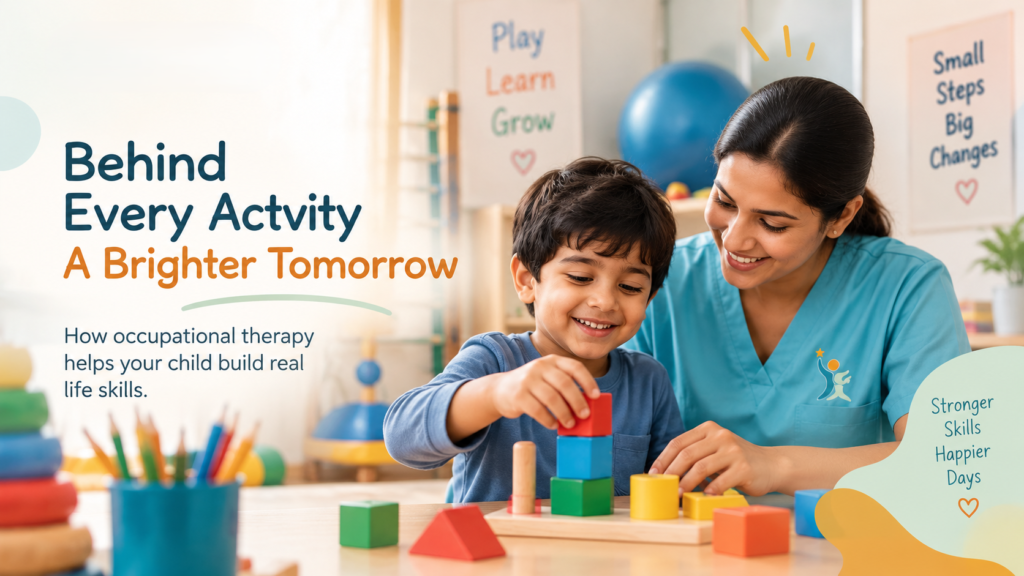
Occupational therapy (OT) focuses on helping children participate meaningfully in daily life, school, play, routines, and social interactions.
OTs identify whether a child is over- or under-responsive to sensory input:
- loud sounds
- clothing textures
- touch
- movement
- bright lights
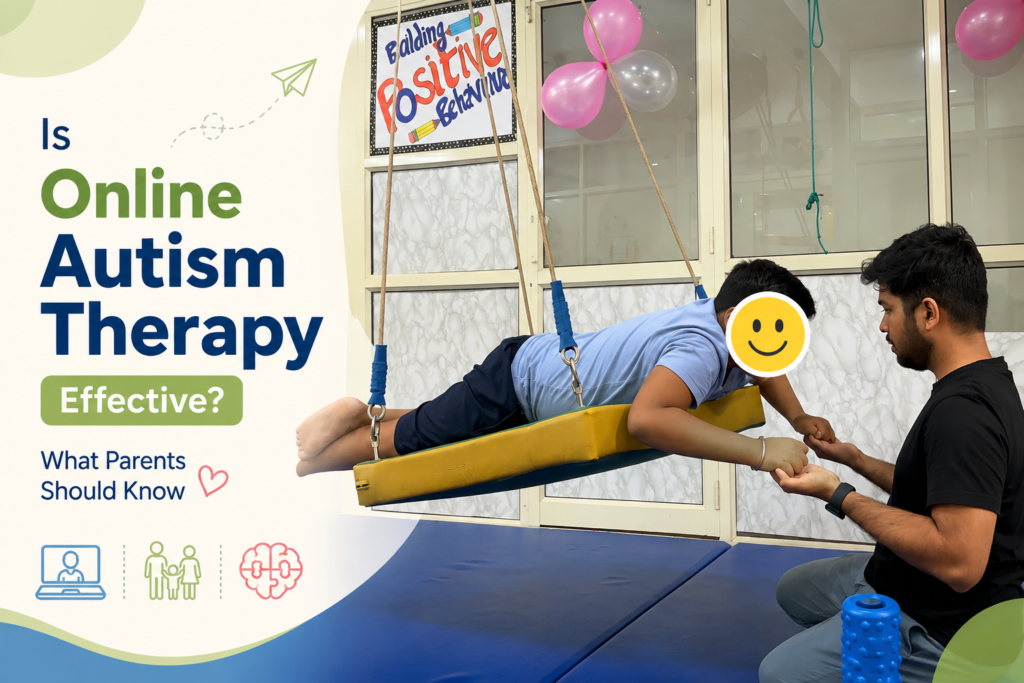
Through sensory integration techniques- swings, deep pressure activities, brushing, weighted items-OT helps the child’s brain process sensations more effectively.
When sensory regulation improves, emotional regulation naturally improves.
Teaching Self-Regulation Strategies
OTs use:
- breathing exercises
- calm-down kits
- heavy-work activities (pushing/pulling)
- fidgets
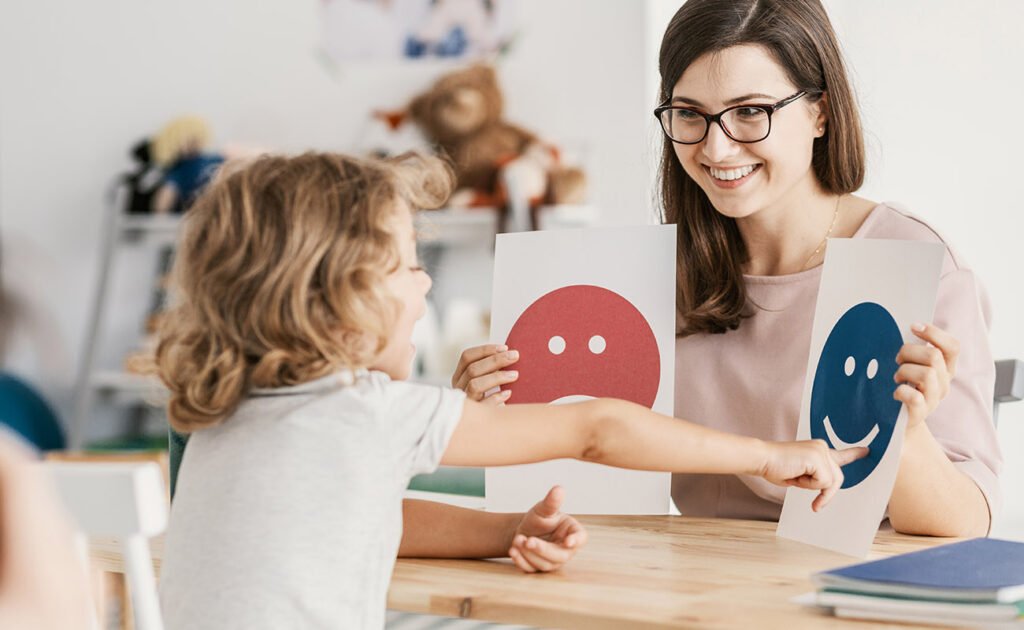
- visual emotion charts
- “zones of regulation”
These help children understand their feelings and learn how to control their responses.
Improving Attention and Impulse Control
For children with ADHD or executive function delays, OT builds:
- planning
- waiting skills
- impulse control
- flexibility
These directly help with managing emotions.
Communication Support
Many meltdowns happen because children cannot express their needs. OTs incorporate visuals, gestures, routines, and sometimes AAC to reduce frustration.
Social-Emotional Skills
OT builds play skills, turn-taking, understanding others’ emotions, and handling disappointment.
When Should Parents Seek OT Support?
Early support brings lifelong benefits.
- Tantrums turn into frequent meltdowns.
- The child avoids noisy places, touch, and certain types of clothing.
- Difficulty calming down.
- Struggles with transitions.
- Delayed play or social skills.
- Difficulty sitting for tasks.
- Strong reactions to minor triggers.
Practical Tips for Parents (Easy to Use at Home)
✔ Create a predictable routine: Children feel secure when they know what comes next.
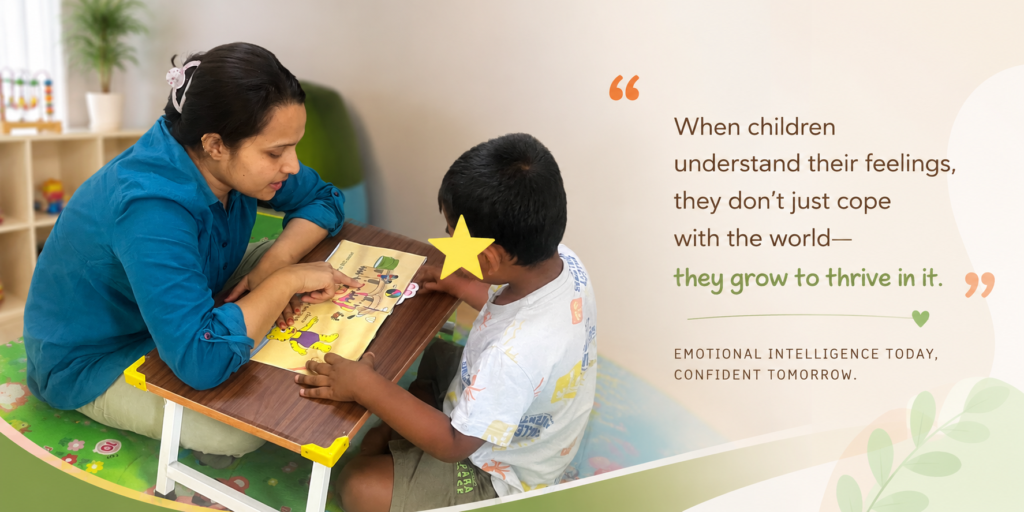
✔ Name the emotion: “Looks like you’re upset because the toy broke. Let’s fix it together.”
✔ Sensory breaks: Jumping, wall pushes, trampoline, swinging—5 minutes can reset an overwhelmed child.
✔ Calm corner at home: Not a punishment zone, but a cosy space with:
- soft toys
- visuals
- fidget tools
- pillows
- books
✔ Co-regulate before expecting self-regulation: Instead of saying “Stop crying,” try: “Main tumhare saath hoon, breathe karte hain. Yaa phir 1 to 10 tak counting karte hai”
Remember! Children borrow our calm.
Final Thoughts!
Every child deserves the time and space to understand their emotions.
And every parent deserves to know—it’s not your fault, you’re not alone, and help is available.
Emotional regulation is not a “luxury skill.” It is shapes the personality of child and emotional intelligence.
Aur sabse important baat – bacche perfect nahi hote, bacche toh bacche hi hote hai, parents bhi perfect nahi hote — par dono ek doosre ke saath seekhte hain.
And as parents, we need to understand and sympathise with our child.
We at Future Wings Clinic are here to help you with empathy, knowledge, and treatment that genuinely change your life.
Please book a consultation today and let us help your child build the skills they need to thrive in school, at home, and in life.
📞 Contact Us here or
📍 Visit us in Dwarka, Delhi